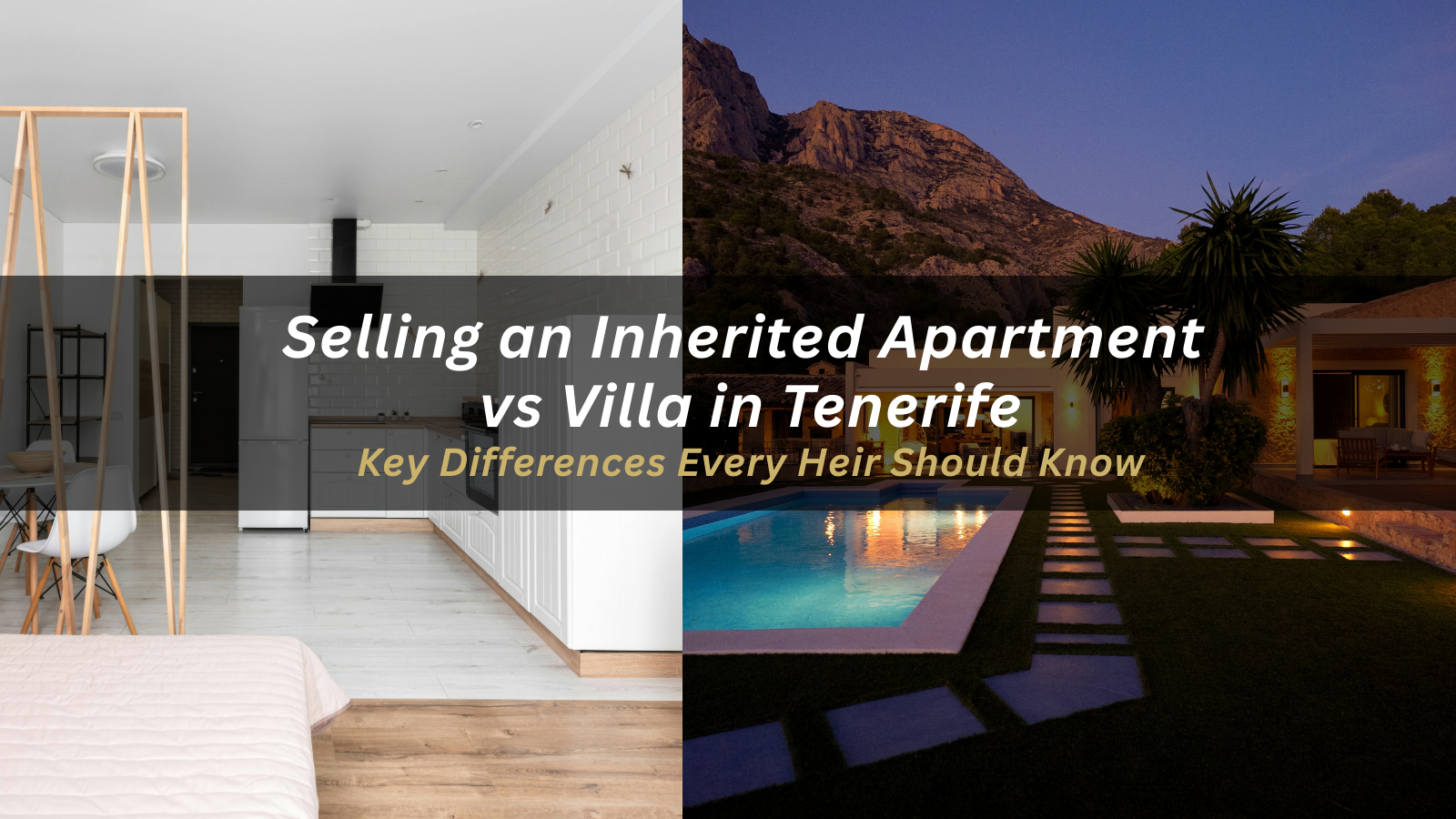
If you’ve inherited property in Tenerife and are thinking about selling, one thing quickly becomes clear.
An apartment and a villa behave quite differently in the market.
The legal process is largely the same, but the practical side of selling can vary quite a bit. Price, demand, preparation… even how long it takes to find a buyer.
Here’s how the two usually compare.
The Legal Process Is the Same
Whether it’s an apartment or a villa, the first step is always completing the inheritance itself.
That normally means:
- Signing the inheritance deed
- Filing the inheritance tax declaration
- Registering the property in the heirs’ names at the Land Registry
Until those steps are finished, the property can’t legally be sold.
Once that’s done, the sale works like any other Tenerife property transaction.
Selling an Apartment
Apartments tend to follow a slightly simpler path.
A few things to keep in mind:
- Community fees apply because the property is part of a shared building
- The community may have rules about rentals or renovations
- Buyers often like apartments because maintenance is predictable
- In tourist areas, demand is usually strong
For those reasons, apartments often move through the market fairly quickly, especially if the price is sensible.
Selling a Villa
Villas are a different type of sale.
They often involve a bit more detail behind the scenes.
For example:
- Land boundaries sometimes need checking against the Catastro
- Pools, terraces or extensions may need to be properly registered
- Gardens and outdoor areas need regular maintenance before viewings
- Prices are higher, which naturally reduces the pool of buyers
Villas can achieve excellent prices, but they often take longer to sell simply because the buyer pool is smaller.
Which One Sells Faster?
In general, apartments sell faster.
There are simply more buyers looking for them. Investors, holiday-home buyers and people wanting a lock-up-and-leave property.
Villas attract a different market. Usually buyers with larger budgets who are planning to live on the island long term.
Which Is Easier to Prepare for Sale?
Apartments are usually quicker to prepare.
Often it’s just a matter of clearing personal belongings, cleaning the property and fixing a few small issues.
Villas tend to require more preparation. Gardens need maintaining, pools need cleaning, and occasionally paperwork needs checking if the property has been extended over the years.
Neither option is better or worse. They simply attract different buyers and move at different speeds.
If you’ve inherited a property in Tenerife and are considering selling, getting an early valuation usually helps clarify what the market looks like.
And more importantly, what kind of timeline you might expect.
Leave a Reply